Pulmonary Perspective PAH
Article Sidebar
Main Article Content
Abstract
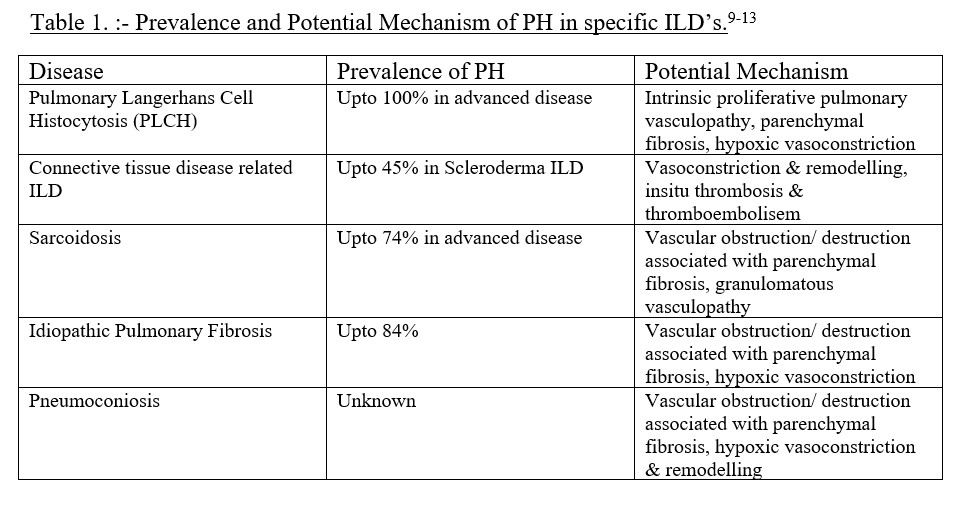
Pulmonary hypertension associated with lung diseases is the second most common form of PH. The most common respiratory causes of Pulmonary hypertension are chronic obstructive pulmonary disease (COPD), Interstitial Lung Disease (ILD) and Obstructive sleep apnea (OSA). PH may also occur due to high altitude exposure and in patients with cystic fibrosis. PH in patients with obstructive of restrictive lung disease has poor outcomes.1Patients with Interstitial Lung Diseases (ILD) may develop Pulmonary Hypertension during the course of disease. This can occur in the absence of advanced pulmonary dysfunction or significant hypoxaemia, hence it may not be well recognized. ILD’s most commonly associated with Pulmonary hypertension include connective tissue disease related ILD, Sarcoidosis, Idiopathic pulmonary fibrosis, and pulmonary Langerhans cell histocytosis. The patients with ILD may develop PH due to various mechanisms like pulmonary vasoconstriction and remodelling, progressive parenchymal fibrosis, perivascular fibrosis, vascular inflammation and thrombotic angiopathy. A high index of suspicion is needed for diagnosis as the clinical presentation is often nonspecific. Colour Doppler echocardiography is the most important non-invasive clinical tool that helps in assessment of degree of PH along with the cardiac status. Right heart catheterization is also helpful in confirmation of PH, along with assessing its severity and planning for further management. Management of PH in patients with lung diseases depends on the underlying cause. An increasing number of pharmacological agents are now available for the possible treatment in patients with PH.