Air Pollution and Its Impact on Interstitial Lung Diseases: A Narrative Review
Article Sidebar
Main Article Content
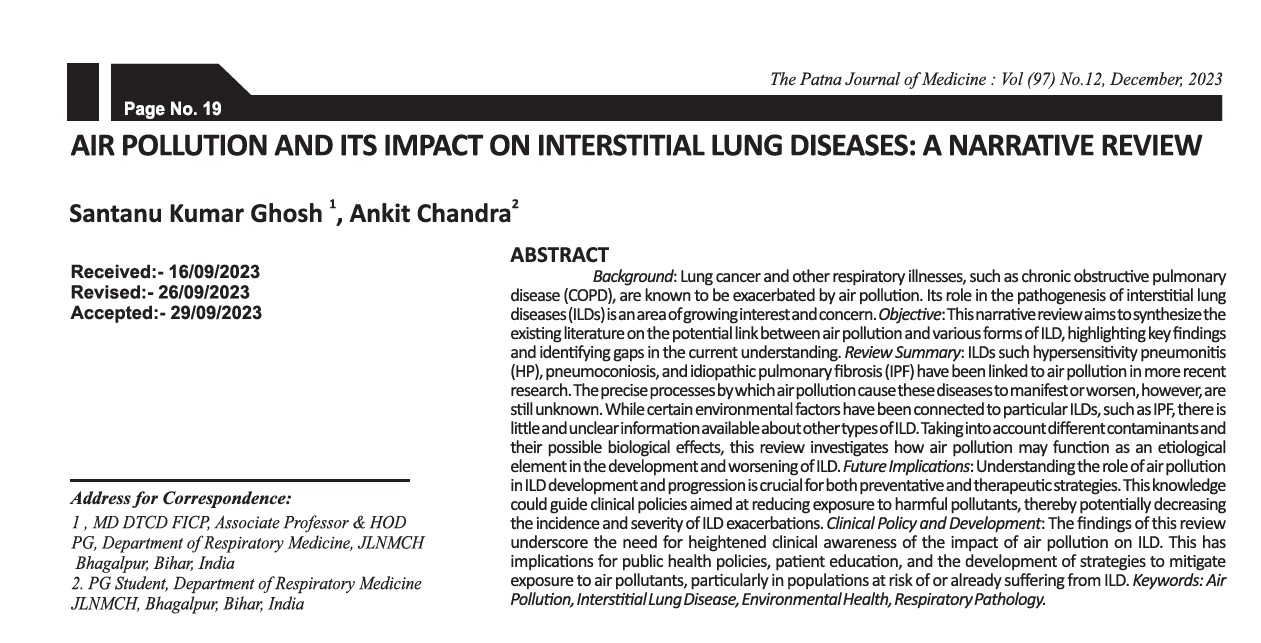
Abstract
Background: Lung cancer and other respiratory illnesses, such as chronic obstructive pulmonary disease (COPD), are known to be exacerbated by air pollution. Its role in the pathogenesis of interstitial lung diseases (ILDs) is an area of growing interest and concern.
Objective: This narrative review aims to synthesize the existing literature on the potential link between air pollution and various forms of ILD, highlighting key findings and identifying gaps in the current understanding.
Review Summary: ILDs such hypersensitivity pneumonitis (HP), pneumoconiosis, and idiopathic pulmonary fibrosis (IPF) have been linked to air pollution in more recent research. The precise processes by which air pollution causes these diseases to manifest or worsen, however, are still unknown. While certain environmental factors have been connected to particular ILDs, such as IPF, there is little and unclear information available about other types of ILD. Taking into account different contaminants and their possible biological effects, this review investigates how air pollution may function as an etiological element in the development and worsening of ILD.
Future Implications: Understanding the role of air pollution in ILD development and progression is crucial for both preventative and therapeutic strategies. This knowledge could guide clinical policies aimed at reducing exposure to harmful pollutants, thereby potentially decreasing the incidence and severity of ILD exacerbations.
Clinical Policy and Development: The findings of this review underscore the need for heightened clinical awareness of the impact of air pollution on ILD. This has implications for public health policies, patient education, and the development of strategies to mitigate exposure to air pollutants, particularly in populations at risk of or already suffering from ILD.