Salvage of Exposed Spinal Hardware With a Pedicled Latissimus Dorsi Muscle Flap After Kyphosis Correction in a Healed Post-Tubercular Pediatric Spine: A Case Report
Article Sidebar
Main Article Content
Abstract
Background: Spinal instrumentation in children with post-tubercular kyphosis carries a heightened risk of wound‐healing problems because of scarred, avascular tissue. Once hardware becomes exposed, timely vascularized soft-tissue coverage is essential to avoid implant removal.
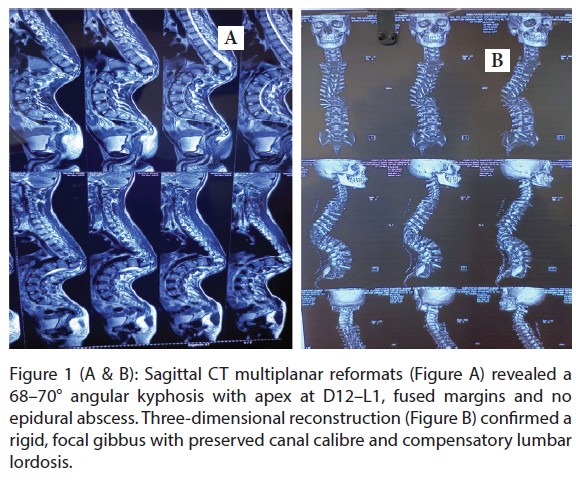
Case Presentation: A 15-year-old boy with a healed history of spinal tuberculosis underwent vertebral column realignment and kyphosis correction using a PITKAR® implant system. On postoperative day (POD) 15, he developed midline wound dehiscence with purulent discharge and exposed hardware. Pre-referral CT demonstrated a rigid 68–70° angular kyphosis centered at D12–L1 without active infection. After radical debridement, an ipsilateral pedicled latissimus dorsi (LD) muscle flap, detached 5 cm proximal to its iliac-crest origin to gain reach, was rotated across the midline to blanket the implant; the residual raw surface was resurfaced with a split-thickness skin graft (SSG). The flap remained viable, cultures were sterilized, and the patient resumed rehabilitation without further wound complications.
Conclusion: Early plastic-surgical intervention with a pedicled LD flap offers reliable, single-stage salvage of exposed spinal instrumentation in complex pediatric spines, preserving deformity correction and avoiding the morbidity of implant removal.