Assessment of Oxidative Stress Related Parameters in the Development of Diabetes and Diabetic Nephropathy
Article Sidebar
Main Article Content
Abstract
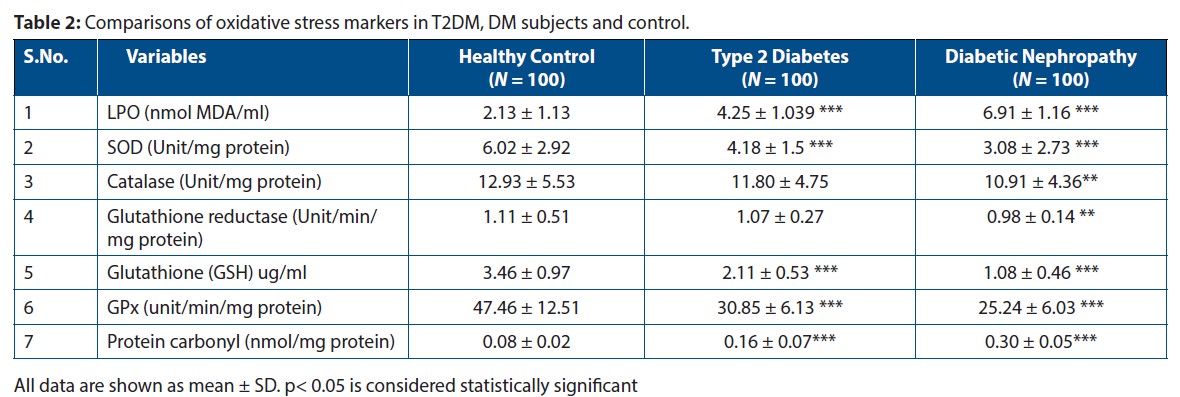
Background: Diabetic nephropathy (DN) is the most general cause of end stage renal disease. Reactive oxygen species (ROS) play a key factor in type 2 diabetes mellitus (T2DM) and progression of diabetic nephropathy. The goal of our present study is to evaluate the levels of oxidative and antioxidative markers in T2DM and DN patients in North Indian population. Level of Catalase (CAT), lipid peroxides (LPO), superoxide dismutase (SOD), reduced glutathione (GSH), glutathione peroxidase (GPx), glutathione reductase (GR) and protein carbonyl content were estimated in controls, viz.type 2 diabetes patients and type 2 diabetes patients with nephropathy.
Results: Activity of SOD and CAT was significantly reduced in DN as compared to controls. Lipid peroxidation and protein carbonyl content concentration was significantly high in both diabetes and nephropathy patients as compared to controls. The activity of GSH, GPx and GR was considerably reduced in type 2 diabetes patients with and without nephropathy patients in comparison to the control group.
Conclusion: Our findings showed that elevated levels of LPO may lead to decreased levels of cellular antioxidant enzymes, resulting in more severe OS in T2DM patients with nephropathy as compared to patients having simple T2DM. Thus, OS may be playing a vital intermediary role in the pathogenesis of development of diabetic nephropathy.
Article Details

This work is licensed under a Creative Commons Attribution-NonCommercial-ShareAlike 4.0 International License.
The Journals licensing terms of CC-BY-NC-SA 4.0 speaks that you are free to Share (copy and redistribute the material in any medium or format), Adapt (remix, transform, and build upon the material) under proper terms of Attribution (You must give appropriate credit, provide a link to the license, and indicate if changes were made. You may do so in any reasonable manner, but not in any way that suggests the licensor endorses you or your use.), NonCommercial (You may not use the material for commercial purposes.), ShareAlike (If you remix, transform, or build upon the material, you must distribute your contributions under the same license as the original.) and No additional restrictions (You may not apply legal terms or technological measures that legally restrict others from doing anything the license permits.)